Roof truss lifts are often one of the most time sensitive parts of a building project. If the delivery arrives and the crane setup is not right, the whole day can start slipping very quickly. Trades are left waiting, access gets blocked, and what should have been a straightforward install can become far more awkward and expensive than expected. That is why we always recommend planning a roof truss lift properly before the hire day. It is not simply a case of sending a crane to site and hoping the reach works. The type of crane, the available access, the size and weight of the trusses, the ground conditions and the level of lift planning all make a difference. At A-Lift Crane Hire, we regularly help with planned lifting jobs where timing, access and safety all need to line up properly. In this guide, we are looking at the main points that affect roof truss crane hire for building projects, and why getting those details right early usually makes the job run far more smoothly on site.
Why roof truss lifts need proper planning
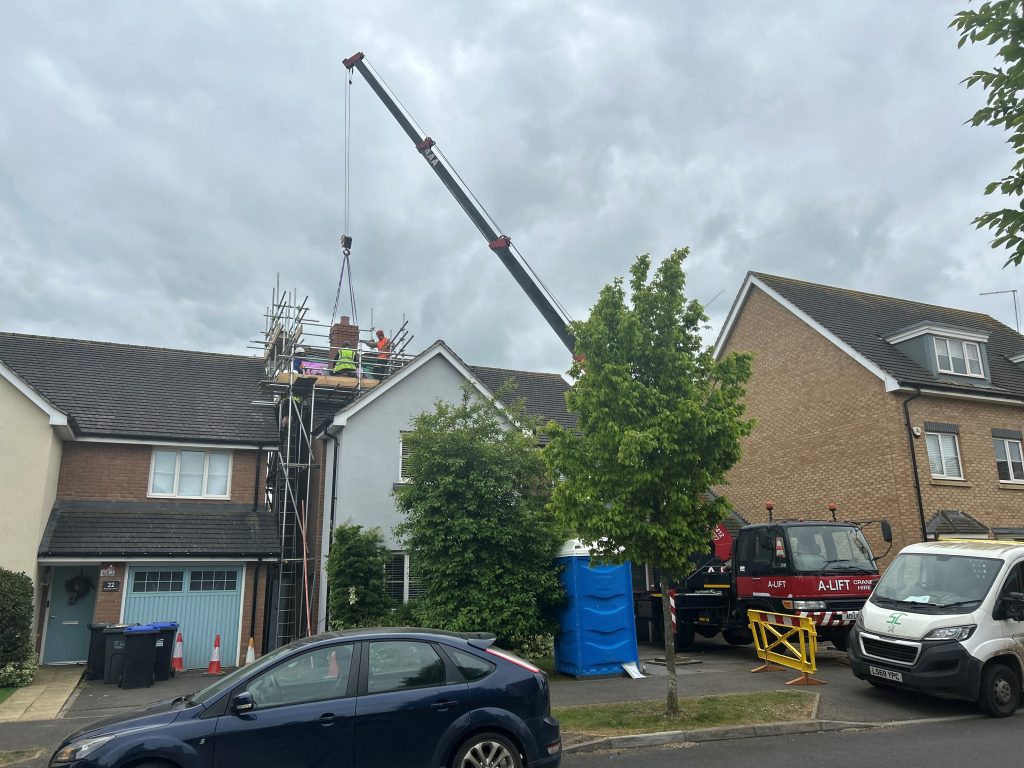
 Roof trusses may look straightforward enough when they are stacked on a delivery vehicle, but lifting them into position is often more involved than people expect. Even on smaller residential jobs, there can be issues with reach, obstructions, parked vehicles, overhead cables, narrow access or limited room for setting up the crane safely. On larger sites, the challenge is slightly different but just as important. There may be tighter build programmes, multiple trades working around the same area, or a need to coordinate deliveries so we can lift and place the trusses with minimal disruption. In practical terms, we need to think about:
- the size and weight of the trusses or roof structure components
- where the delivery vehicle will arrive and unload
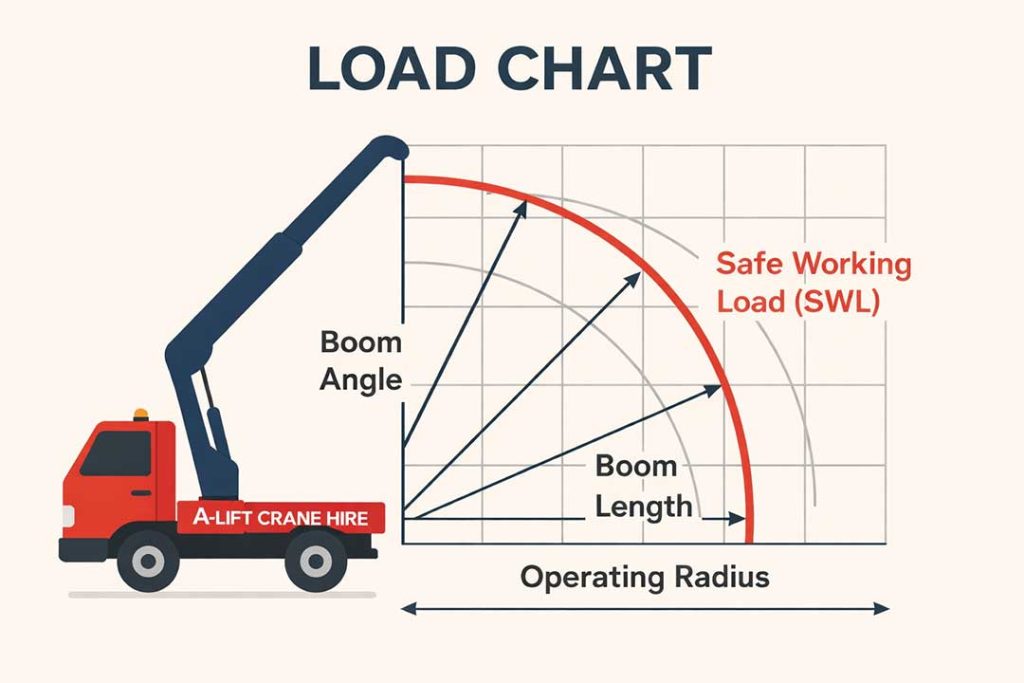
- how far the crane needs to reach
- ground bearing conditions and setup area
- any nearby buildings, trees, scaffolding or services
- how the trusses will be landed and installed safely
If any of those points are unclear at the booking stage, there is a greater chance of delays, access problems or the wrong lifting setup being chosen for the job.
What we need to know before the lift
The smoothest roof truss lifts are usually the ones where the key information is available early. That does not mean every customer needs a huge technical pack, but the more accurate the details are, the easier it is for us to recommend the right lifting solution. Before the day of the lift, it helps if we have:
- the site address and access details
- the delivery date or preferred lift date
- approximate truss lengths, bundle sizes and weights
- photos of the site and surrounding access where possible
- confirmation of whether scaffolding is already in place
- details of any overhead cables, restricted roads or neighbouring structures
- an idea of where the crane can stand and where the trusses need to go
Even a few clear site photos can be genuinely useful. They often help us spot access or setup issues early enough to avoid problems on the day.
Choosing between CPA Crane Hire and CPA Contract Lift
This is one of the biggest decisions on any roof truss job. We offer both CPA Crane Hire and CPA Contract Lift, but they suit different situations. Under CPA Crane Hire, responsibility for planning and supervising the lift remains with the customer. This is usually the better option where the customer already has the right experience, qualified personnel and suitable insurance in place. Under CPA Contract Lift, we take responsibility for planning and executing the lift. Our Appointed Persons can carry out a site survey, prepare the risk assessment and method statement, and arrange the personnel and equipment needed to manage the lift in line with BS7121. For many roof truss lifts, especially on domestic builds or smaller construction sites, Contract Lift is often the more practical route because it reduces the burden on the customer and gives the job a clearer structure from the outset. A simple rule of thumb: if you do not have your own qualified Appointed Person and the insurance responsibility covered on your side, a Contract Lift will be your required option.
| What the job needs | CPA Crane Hire | CPA Contract Lift |
|---|---|---|
| Who plans and supervises the lift | Your team plans and manages the lift | We plan and manage the lift |
| Best suited to | Sites with their own qualified Appointed Person and lift management in place | Projects where you want us to take care of lift planning, paperwork and execution |
| Site survey, RAMS and lift plan | Usually arranged by the customer’s side | Included as part of our planning process |
| Insurance responsibility | Remains with the customer under CPA terms | Covered under our Contract Lift terms, subject to standard conditions |
| Typical fit for roof truss jobs | Larger or more structured sites with internal lift expertise | Domestic builds and building projects where a managed lift is the safer and simpler option |
For roof truss crane hire, Contract Lift is often the better fit where planning responsibility, site coordination and insurance need to be handled through one managed service.
Access can make or break the lift
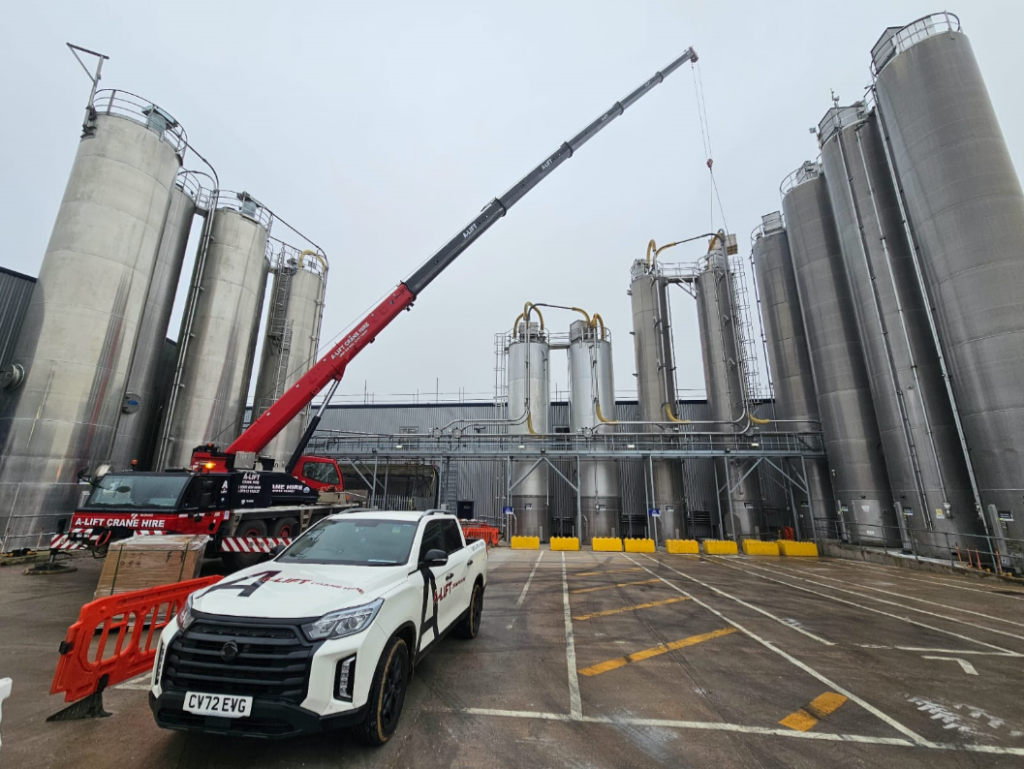
One of the most common issues with roof truss crane hire is not the weight of the lift itself, but access. A site may have enough room for delivery, but not enough room for the crane to set up safely with the required outriggers and working radius. In other cases, the proposed setup position may be possible in theory, but poor in practice because of soft ground, roadside restrictions or nearby obstructions. This is where experience matters. A site that looks manageable from the road can still need a different crane configuration, traffic management, or a revised setup plan once we assess it properly. Where necessary, we can also deal with local authority arrangements such as road closure licences as part of a Contract Lift. That can be particularly important on restricted sites or where trusses need to be lifted from the roadside.

Ground conditions should never be an afterthought
Crane setup is not only about space. It is also about what is underneath the crane. If the ground is unstable, recently disturbed, soft, sloping or unsuitable for the imposed load, that becomes a serious issue. That is one reason accurate site information matters so much. If there are drainage runs, basements, service trenches or recently backfilled areas near the intended crane position, we need to know that before the lift. Leaving that discussion until the crane arrives is risky and, in most cases, avoidable. Even where the lift itself is fairly modest, the setup loads imposed by the crane can still be significant. Proper planning and assessment should never be treated as optional.
Getting the truss delivery timing right
Roof truss jobs usually run best when the crane slot and the delivery slot are coordinated properly. If trusses arrive too early, they can sit in the way and make site movement more awkward. If they arrive late, the crane and labour can end up standing by. Neither is ideal. There is also the question of installation readiness. The supporting structure needs to be ready to receive the trusses, the route needs to be clear, and the team fixing them into place needs to be prepared to work efficiently once lifting starts. That may sound obvious, but on busy sites this is often where time gets lost. A well-organised roof truss lift is not just about booking crane hire. It is about making sure the site is genuinely ready to use it.
Why an early site survey is often the best starting point
We offer a free initial site survey, and for roof truss lifts that is often where the biggest value sits. It gives us the chance to identify practical issues before they become on-site problems. A survey can help us confirm:
- whether the proposed crane size is suitable
- the safest setup position
- whether there are access or licence issues to deal with
- what personnel or lifting equipment may be required
- whether the job is better handled as CPA Crane Hire or Contract Lift
For straightforward lifts, that may simply provide reassurance. For more complex jobs, it can prevent a very expensive false start.
Common issues we see on roof truss jobs
There are a few recurring problems that tend to crop up on these lifts:
- booking based on estimates rather than actual truss weights and dimensions
- assuming site access is fine without checking setup space properly
- not thinking through delivery vehicle positioning
- forgetting about scaffolding, overhead cables or neighbouring properties
- choosing CPA Crane Hire when the planning responsibility really needs to sit with us under a Contract Lift
- leaving enquiries too late, especially where permits or road management may be required
- Having roof trusses stored on truss racks that are too high or poorly constructed, to enable safe access to sling or attach the hook to the load.
Most of these issues are preventable. The earlier we can discuss the job, the easier it is to line everything up properly.
Why crane hire is often the right solution for roof trusses
In many cases, using a crane is not simply about convenience. It is about handling long, awkward components safely and placing them accurately with far less manual handling on site. Trusses can be lifted straight into position, which can help keep the roofing stage moving and reduce unnecessary rehandling. It also gives site teams a more controlled way of dealing with awkward access or height. Trying to improvise around that usually costs more in the end. Where the lift is properly planned, crane hire can help keep the job moving with less disruption and more confidence that the trusses will be placed where they need to be, when they need to be there.
Talk to us about roof truss crane hire
If you are planning a roof truss lift and want practical advice on the best way to approach it, we can help. We offer both CPA Contract Lift and CPA Crane Hire, depending on the level of planning responsibility required, and we can carry out a free initial site survey to assess your lifting requirements. To discuss your project, call 0800 804 6696, email enquiries@aliftcranehire.co.uk, or visit our contact page to get in touch.
Need a quote for a roof truss lift?
Speak to us on 0800 804 6696 to arrange a free initial site survey and discuss the most suitable lifting option for your job.