Long loads can be awkward before they ever leave the ground. Steel sections, timber packs, roof beams and similar items often have plenty of length but limited depth, which means they can flex, tilt or rotate if the lifting arrangement is not properly thought through.
The right lifting equipment helps the crane team keep the load balanced, stable and predictable. This guide explains the common options used to control long loads and what customers should understand before arranging a lift.
Why long loads need extra control

A long load behaves differently from a compact load. Even when the weight is within the crane capacity, the shape can create control issues. The centre of gravity may not be obvious, the ends can dip, and wind can have a greater effect because the load presents more surface area while suspended.
The main aim is to keep the load as level and steady as reasonably possible. That does not mean making the lift complicated for its own sake. It means choosing lifting equipment that supports the load at sensible points, reduces unwanted movement and gives the crane team enough control during slewing, travelling, raising and landing.
For customers, the useful question is not simply, what crane can lift this? A better question is, how will the load be controlled throughout the lift? That includes how it is attached, how it is guided, where people stand, how the landing area is prepared and whether the load needs protection from crushing or marking.
Spreader beams and lifting beams

Spreader beams and lifting beams are often used when a long load needs support at more than one point. Instead of bringing two sling legs up to a narrow hook point and creating a steep angle, a beam can help keep the sling arrangement wider and more controlled.
A spreader beam usually works by taking compression through the beam while the slings support the load from points along its length. This can reduce sling angles and help distribute forces more sensibly. A lifting beam is typically designed to lift from above and connect to the load below, which can be useful where headroom, attachment points or load shape influence the plan.
These items are not interchangeable in every situation. The choice depends on the load weight, length, lifting points, available headroom and how the item must be presented when landed. That is why long loads benefit from early discussion with a crane hire team that understands both crane selection and lifting equipment for controlled crane lifts.
Used correctly, beams help prevent the ends of a long load from dropping unexpectedly. They can also make the lift more predictable when moving beams, frames, packs of timber or fabricated sections into position.
Slings, shackles and attachment points
Slings are the direct connection between the lifting equipment and the load, so their selection matters. Chain slings, wire rope slings and webbing slings all have different strengths, handling qualities and suitability for different surfaces. The right choice depends on the load, the environment and the method of attachment.
For long loads, the sling position is particularly important. If the lifting points are too close together, the load may sag or become unstable. If they are too far apart without proper support, the load may be difficult to control at landing. The lift plan should consider where the load is strongest, where approved lifting points exist and whether any packing or edge protection is needed.
Shackles, hooks and other connecting components must also be matched to the job. They need to be compatible with the sling type, load connection and expected forces. It is not enough for each item to be strong in isolation. The whole arrangement needs to work as a system.
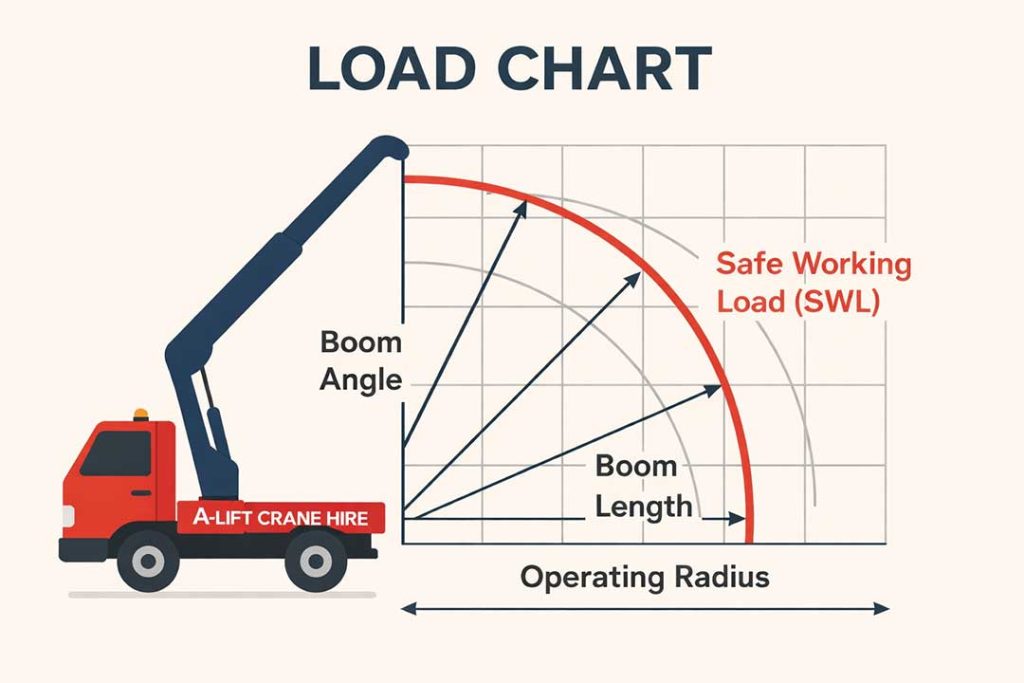
This is where a proper understanding of load charts also helps. Crane capacity is only one part of the picture, but it still affects the lifting radius, boom configuration and planning choices. For customers who want a clearer grounding, A Lift Crane Hire has also covered how load charts affect crane lifting decisions.
Tag lines and guided movement

Tag lines are used to help control orientation and reduce rotation. They are not a substitute for good lifting equipment, but they can be valuable when a long load needs to be guided into position. A tag line may help prevent the load from spinning or help align it before landing.
The important point is that tag lines must be used under control. The people handling them need a clear position, clear communication and a safe route. They should not be used to fight a badly planned lift or pull a load into a position that the crane cannot safely achieve.
Long loads can also require more patience during final placement. A beam or timber section may need to be landed onto supports, into pockets or beside existing works. Small movements matter. Good communication between the crane operator, slinger signaller and lift supervisor helps keep those final adjustments calm and precise.
For building work, this is one reason contract lifting can be useful. It brings planning, supervision and responsibility together in a structured way, so the lift is not treated as simply a machine arriving to pick something up.
Load protection and stability during landing
Controlling a long load does not end once it reaches the landing area. The load must remain stable when it is lowered, released and left in place. Poor support at the landing point can cause a long item to roll, twist or settle unevenly.
Before the lift starts, the team should consider what the load will sit on, how it will be chocked or supported, and whether the slings can be removed without trapping them. Timber bearers, stillages, temporary supports or prepared fixing points may all form part of the method, depending on the item being lifted.
Surface protection can also matter. Webbing slings may be chosen where the surface finish needs care, while chain or wire rope may be better suited to other load types. Edge protection can prevent sling damage and protect the load from concentrated pressure. These details are practical, not decorative. They reduce the chance of damage and help the lift proceed smoothly.
Where roof components are involved, the same principles apply. Long trusses and beams need a stable lifting arrangement, careful guidance and a prepared landing zone. The related guide to roof truss crane hire for building projects gives more detail on that type of lifting work.
Planning the lift before choosing equipment

The best lifting equipment choice comes from the lift requirements, not guesswork. A crane hire team will usually want to understand the load weight, length, shape, lifting points, access, radius, height, ground conditions and landing area. Photographs, drawings and manufacturer information can all help, provided they are accurate.
For customers, it is useful to share anything that may affect handling. That includes whether the load is flexible, fragile, bundled, painted, awkward to sling or difficult to access once delivered. It is also worth explaining the sequence of work. A load that is easy to lift from a delivery vehicle may need different control when it is being threaded through an opening or placed onto supports.
Equipment should also be inspected, suitable and used by competent people. Regular maintenance supports reliability across the crane and lifting equipment involved in the job. A Lift Crane Hire explains the wider value of this in its guide to regular maintenance in crane hire services.
When the planning is done well, the equipment choice becomes clear. The lift may call for a spreader beam, lifting beam, selected sling arrangement, tag lines, edge protection or a combination of these. The result is a lift that is easier to control from pick up to placement.
- Long loads need planning around balance, support points and movement, not just total weight.
- Spreader beams and lifting beams can help distribute forces and keep long loads steadier.
- Slings, shackles and attachment points must work together as one lifting system.
- Tag lines can help guide long loads, but only as part of a controlled lifting method.
- The landing area should be prepared before the lift begins, including supports and sling removal access.
Frequently asked questions
What is the best lifting equipment for long steel beams?
There is no single best option for every beam. Many lifts use a spreader beam or lifting beam with suitable slings, shackles and edge protection. The right arrangement depends on the beam weight, length, lifting points, centre of gravity, headroom and landing position.
Do tag lines stop a long load from swinging?
Tag lines can help control orientation and reduce unwanted rotation, but they do not replace proper planning or suitable lifting equipment. Swing is mainly managed through the lift method, crane operation, communication and controlled movement.
Can webbing slings be used for timber or finished materials?
Webbing slings can be suitable where surface protection matters, but the load, edge condition and lifting method must be checked. Sharp edges, rough surfaces or concentrated pressure may require protection or a different sling type.
Why is the centre of gravity important with long loads?
If the centre of gravity is not allowed for, the load can tilt as it leaves the ground. Identifying balance helps the team choose lifting points and equipment that keep the load steadier during the lift.
Need help planning a controlled lift?
Speak to A Lift Crane Hire about the load, access and placement details. The team can help identify the crane and lifting equipment needed for a safe, practical lifting plan.