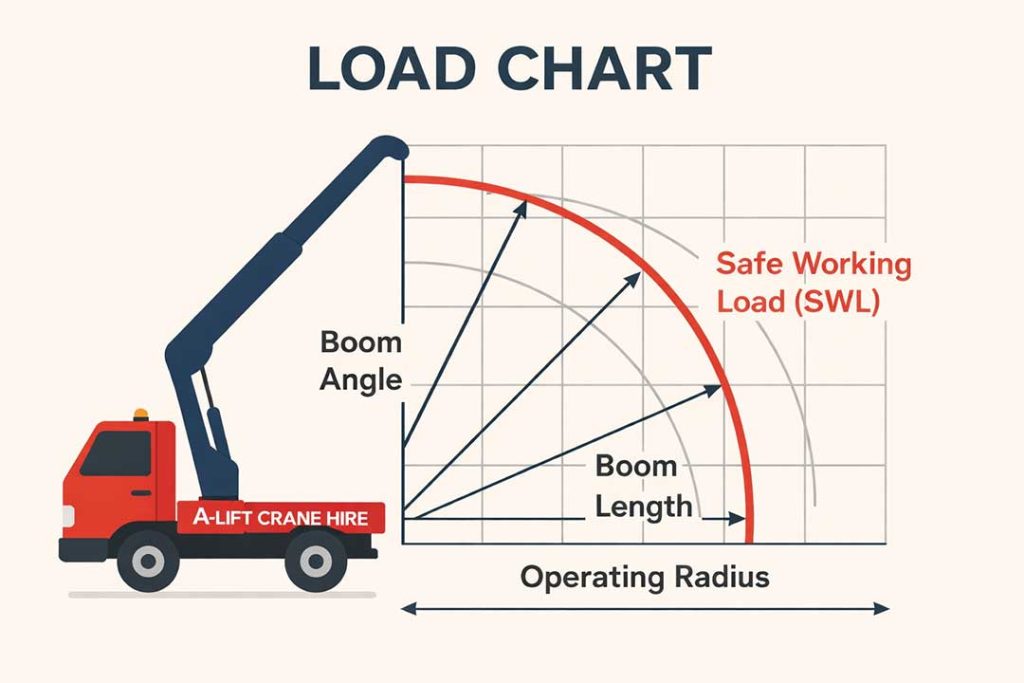
A mobile crane can provide the lifting power, reach and positioning needed for demanding site work, but the crane is only one part of a safe lift. The accessories between the hook and the load play a vital role in keeping that lift controlled from start to finish.
Slings, shackles, spreader beams, lifting beams, chains, clamps and other crane lifting equipment all help the appointed team manage weight, balance, angles and movement. Used correctly, they support safer lifting operations and better decision making on site.
Why lifting accessories matter in mobile crane operations
Every lift has a load, a crane, a lifting path and a landing area. Between those points sits the rigging arrangement. This is where lifting accessories do much of their work. They connect the load securely to the crane hook, help share forces correctly and reduce the chance of movement that could make the lift difficult to control.
The right accessory choice depends on the load itself. A compact machine, a steel frame, a container, a plant item and a fragile component may all need different lifting methods. Some loads have built in lifting points. Others need slings wrapped or basketed in a particular way. Some require a beam to prevent crushing, bending or unstable angles.
Good lifting practice starts before anything leaves the ground. The team needs to understand the load weight, centre of gravity, lifting points, headroom, radius, ground conditions and route. Accessories are then selected to suit that planned method, rather than being chosen simply because they are available.
This is one reason professional crane lifting services look closely at the whole lift, not just the crane capacity. A crane may be capable of lifting the weight, but the accessory arrangement must also be suitable for the load, the geometry and the environment.
How the right accessories help control the load

A safe lift is not only about whether the load can be lifted. It is about whether it can be lifted in a controlled, predictable way. Accessories help by improving connection, balance, load distribution and stability.
Slings are one of the most common examples. Wire rope, chain and synthetic slings each have different strengths and uses. The choice affects flexibility, protection, weight, grip and resistance to site conditions. Sling length also matters because it changes the lifting angle. As the angle becomes wider, forces in the sling can increase, which must be allowed for in the lifting plan.
Shackles, hooks and connectors provide secure attachment points, but they must be correctly rated and compatible with the rest of the arrangement. The pin, bow, orientation and loading direction all matter. A connector that is strong enough in one direction may not be suitable if side loaded or used incorrectly.
Spreader beams and lifting beams can make a major difference where a load needs support across more than one point. They can reduce sling angles, protect the load from compression and help keep long or awkward items level. For some lifts, the beam is what turns a difficult load into a manageable one.
For more detail on the types of accessories available, A Lift Crane Hire provides lifting equipment for crane operations alongside its mobile crane hire services.
Matching equipment to the lift plan

Lifting accessories should be chosen as part of the lift planning process. This means considering the load, the crane, the people involved and the site conditions together. A well matched accessory arrangement helps the lift team keep the operation calm, clear and repeatable.
Key details include the verified load weight, the centre of gravity, the number and position of lifting points, the required lift height, the available headroom and any restrictions along the route. The team also needs to think about how the load will behave once it is airborne. A load that looks simple at ground level may rotate, tilt or swing if the lifting points are not correctly planned.
The crane configuration matters too. Radius, boom length, counterweight, outrigger setup and ground support all affect the available capacity. Accessories add weight to the hook, and that weight must be included in the lift calculation. This is often called the hook block and rigging allowance, and it should never be treated as an afterthought.
If load capacity is part of the planning conversation, it helps to understand how crane charts are used. A clear guide to understanding load charts can make those discussions more practical for site teams and project managers.
Inspection and condition checks before lifting

Even the correct accessory can become unsuitable if it is damaged, worn, contaminated or used outside its intended limits. Pre use checks are therefore a core part of safe lifting operations.
Typical checks include looking for cuts, crushing, stretching, corrosion, missing identification, damaged stitching, distorted links, worn pins, heat damage and signs of overload. The exact checks depend on the equipment type, but the principle is the same. If the condition is uncertain, the accessory should not be used until it has been assessed by a competent person.
Identification is important because lifting equipment must be traceable to its rated capacity and inspection status. A sling or shackle without clear information creates avoidable uncertainty. The lifting team needs to know what the item is rated for, how it should be used and whether it remains fit for service.
Storage also affects safety. Accessories kept clean, dry and protected are easier to inspect and less likely to suffer avoidable damage. On busy sites, simple discipline around storage and handling can prevent a lot of problems before they begin.
Maintenance culture matters across the wider lifting operation too. The same attention that goes into accessory checks should also apply to the crane, support equipment and workshop standards. A Lift Crane Hire has written about regular maintenance in crane hire services, which is closely connected to dependable lifting performance.
Communication between the lift team
Lifting accessories improve safety, but they do not work in isolation. The people planning, supervising and carrying out the lift need a shared understanding of how the equipment will be used.
Before the lift, the team should confirm the lifting method, the accessory arrangement, exclusion zones, communication signals and stop points. The slinger signaller, crane operator, lift supervisor and appointed person each have a role in keeping the operation controlled. Clear communication helps prevent rushed decisions once the lift has started.
During the lift, small movements often reveal whether the setup is behaving as expected. A trial lift can confirm balance, sling tension and load attitude before the item is moved further. If anything looks wrong, the correct response is to stop, lower the load and reassess the arrangement.
Accessories such as tag lines can help control rotation or guide a load, but they must be used carefully and from a safe position. They are not a substitute for a sound rigging method. Their purpose is to assist controlled movement, not to correct an unstable lift.
Where contract lifting adds value

Some lifting operations are straightforward enough for an experienced site team to manage under a suitable hire arrangement. Others benefit from a fuller contract lifting approach, where planning, supervision, equipment selection and execution are brought together under one managed service.
This can be particularly useful when the load is unusual, access is restricted, multiple parties are involved or the lift needs detailed planning before site work begins. In those cases, the accessory selection is considered alongside the crane choice, lift plan, method statement and risk assessment.
The value is not simply in providing more equipment. It is in making sure every part of the lifting arrangement has a reason. The crane, slings, shackles, beams, mats, communication method and site controls should all support the same plan.
For projects where responsibility and planning need to be clearly defined, it may be useful to compare crane hire with a managed CPA contract lift. The right route depends on the project, competence available on site and the level of support required.
- Lifting accessories are central to safe mobile crane lifts because they connect, balance and control the load.
- The correct sling, shackle, beam or connector should be selected for the specific load and lifting method.
- Accessory weight, sling angles and load geometry must be included in lift planning.
- Inspection, traceability and correct storage help keep lifting equipment fit for use.
- Good communication between the lift team is as important as the equipment itself.
Frequently asked questions
What are lifting accessories in crane lifting?
Lifting accessories are items used between the crane hook and the load, such as slings, shackles, chains, hooks, lifting beams, spreader beams, clamps and lifting points. They help connect and control the load during the lift.
Why do sling angles matter?
Sling angles affect the forces placed on the lifting equipment. A wider angle can increase the force in each sling, so the arrangement must be planned and rated correctly before the lift begins.
Can the wrong lifting accessory make a lift unsafe?
Yes. An accessory may be unsuitable if it is not rated for the task, used at the wrong angle, connected incorrectly, damaged or incompatible with the load. Competent planning and inspection reduce that risk.
Does lifting equipment need to be checked before every lift?
Yes. Pre use checks help confirm that accessories are identifiable, suitable and free from visible damage. Any item that appears worn, distorted, unclear or compromised should be taken out of use for assessment.
Plan safer lifts with the right equipment
If you are planning a mobile crane lift and want guidance on suitable lifting accessories, A Lift Crane Hire can help you choose a practical, safety focused approach.