Complex lifting projects rarely fail because one part is difficult. They become challenging because several demands arrive at once: access is restricted, the load path is awkward, the working area is limited and the programme still needs to move.
All terrain cranes are useful in these situations because they combine road travel, site mobility, lifting capacity and reach in one mobile crane solution. For buyers, the important question is not simply how large the crane is, but whether the crane fleet can support the practical realities of the lift.
What makes all terrain cranes useful on varied lifting projects
An all terrain crane is designed to travel efficiently between jobs and then work across a range of site conditions once it arrives. That balance matters on projects where access and setup are as important as the lift itself.
Many lifting jobs involve more than a clear flat area beside the load. The crane may need to move through controlled site routes, position close to existing structures, work around ground bearing limits or reach across obstacles. All terrain mobile cranes help because they offer strong mobility, compact positioning for their capacity class and flexible boom configurations.
This does not mean every project needs an all terrain crane. It means this type of crane becomes relevant when a standard approach may not give enough reach, setup flexibility or movement across the working area. A professional crane hire team will look at the load, radius, access, lifting zone and surrounding risks before confirming what equipment is suitable.
For many buyers, the value sits in having access to a capable crane fleet rather than a single machine. Different projects call for different capacities, boom lengths, outrigger arrangements and lifting accessories. That is why fleet depth is such an important part of reliable crane lifting services.
Access is often the first challenge

Before any lift takes place, the crane has to reach the setup position. On straightforward sites, this may be simple. On complex projects, access can involve narrow routes, temporary roadways, uneven surfaces, restricted entrances, live site traffic or sensitive working areas.
All terrain cranes are built to handle movement across varied ground conditions more confidently than many road only lifting options. Their steering arrangements, drive systems and site mobility can make them well suited to projects where the crane must travel from the delivery route to a precise working position.
Access planning is still essential. The team will usually consider the width and height of access routes, turning areas, overhead restrictions, temporary surfaces, underground services and the distance between the arrival point and the lift position. These checks help prevent delays and allow the crane to be positioned correctly before lifting begins.
If you are still deciding whether a site needs mobile crane support at all, A Lift Crane Hire has a useful guide on when to hire a mobile crane for a construction site. It explains the early signs that a lift may need planned crane support rather than relying on site equipment alone.
Reach and radius shape what is possible

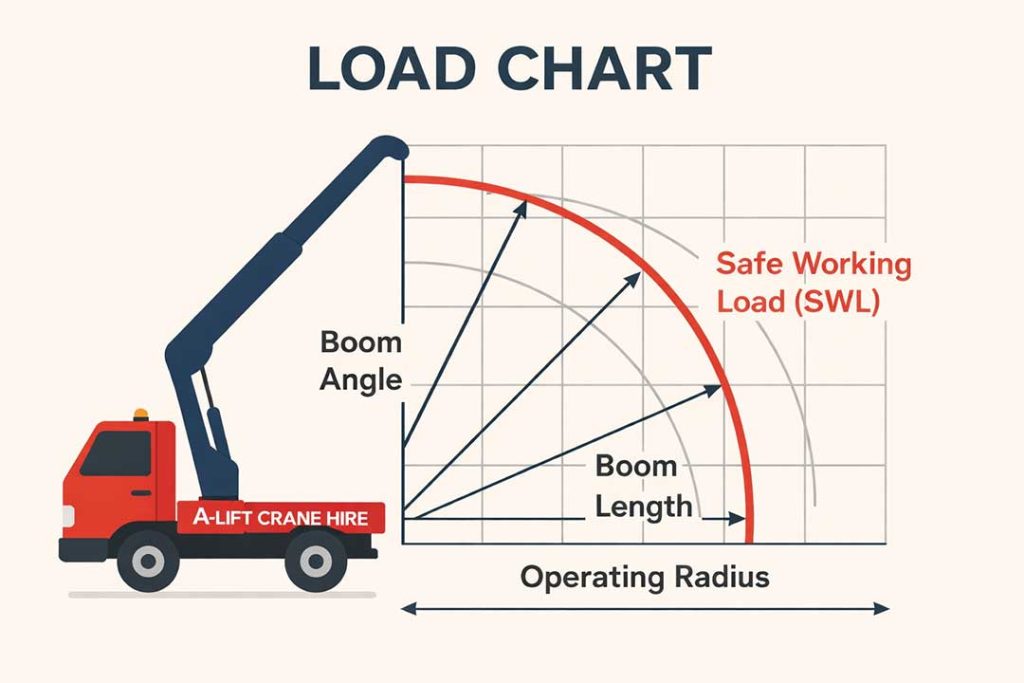
Crane selection is often misunderstood as a question of load weight alone. In reality, the working radius can be just as important. A load lifted close to the crane requires different capability from the same load lifted over a distance, over a structure or into a confined position.
All terrain cranes can support complex lifting projects because their boom options and lifting configurations allow them to work across a range of radii. This can be especially useful where the crane cannot sit directly beside the load or final landing point. The crane may need to lift over an obstruction, work from one side of a structure or place materials into an area with limited direct access.
This is where planning and load chart understanding become important. A crane does not have one fixed capacity in every situation. Capacity changes according to radius, boom length, counterweight, outrigger setup and other lift conditions. Buyers do not need to become crane specialists, but they should understand that a professional assessment protects both safety and programme certainty.
For a clearer explanation of how capacity changes with setup, the guide to understanding crane load charts is a helpful companion piece.
Setup planning keeps the lift controlled

A well executed lift depends on much more than arriving with the right crane. The setup area has to be suitable, the crane has to be positioned correctly and the lifting operation has to be planned around the site conditions.
For all terrain cranes, outrigger setup is a key part of that process. The crane needs adequate space to deploy safely, and the ground must be suitable for the loads imposed during lifting. Where required, suitable mats or support arrangements may be used to spread loads and protect the working area.
Setup planning may include:
- Reviewing access from arrival point to crane position.
- Checking the proposed lifting radius and boom configuration.
- Assessing ground conditions and support requirements.
- Confirming exclusion zones and communication methods.
- Coordinating lifting accessories, slings, chains, beams or other equipment.
This is also where the difference between crane hire options becomes important. Under CPA crane hire for planned lifting projects, responsibilities are clearly defined, so buyers can choose the arrangement that matches their own level of planning, supervision and appointed person provision.
Why fleet capability matters more than a single crane

Complex projects often change as information becomes clearer. Drawings are updated, delivery times shift, ground conditions are confirmed and site constraints become more detailed. A crane hire provider with a varied fleet can respond more effectively because the recommended crane can be matched to the lift rather than forced into the job.
Fleet capability matters because no single crane is ideal for every lift. One project may need a compact crane with strong manoeuvrability. Another may need greater reach, different counterweight arrangements or additional lifting equipment. The right answer depends on the whole lifting environment.
A broader crane fleet also supports better contingency thinking. If site details change during planning, there may be another machine within the fleet that fits the revised requirement more closely. This gives the lift team room to refine the method without compromising the quality of the plan.
Accessories matter too. The crane is only one part of the lifting system. Slings, shackles, spreader beams and other equipment need to suit the load and the method. A Lift Crane Hire also provides lifting equipment for crane operations, which helps keep the crane, accessories and planning aligned.
How buyers can prepare before asking for crane hire
You do not need to know the exact crane model before speaking to a crane hire company. In fact, it is often better to share the project information and allow the lifting team to advise. The more accurate the information, the more precise the recommendation can be.
Useful details include the load weight, load dimensions, lifting points, pickup position, landing position, access route, available setup area, ground conditions and any nearby restrictions. Drawings, photographs, site plans and delivery information can all help the planning team understand the lift properly.
It is also worth thinking about what must happen before and after the lift. Are other trades working nearby? Is the delivery timed? Does the load need temporary storage? Is there a preferred sequence? These details can influence the method and help the crane team plan a smoother operation.
For more detail on the planning value behind complex crane work, A Lift Crane Hire has also covered how lift planning supports complex jobs. Good planning is not paperwork for its own sake. It is what turns a difficult lift into a controlled, coordinated operation.
- All terrain cranes are especially useful when access, reach and setup conditions all need careful consideration.
- The working radius, boom configuration and ground conditions can be just as important as the weight of the load.
- A capable crane fleet gives buyers more flexibility when project details or site conditions change during planning.
- Clear information at enquiry stage helps the crane hire team recommend the right lifting approach with confidence.
- Lifting equipment, site planning and communication are all part of a successful crane lifting operation.
Frequently asked questions
What is an all terrain crane best used for?
An all terrain crane is useful when a lifting project needs both road travel and strong site mobility. It can support jobs with varied access, changing ground conditions, longer reach requirements or restricted setup positions.
Do I need to choose the exact crane before contacting a hire company?
No. It is usually better to provide details about the load, access, lifting radius, ground conditions and site restrictions. The crane hire team can then advise which crane and lifting arrangement is suitable.
Why does lifting radius matter so much?
A crane’s lifting capacity changes depending on how far the load is from the crane. A heavier load close to the crane and a lighter load at a longer radius can place very different demands on the equipment.
What information helps with planning an all terrain crane lift?
Helpful information includes load weight, dimensions, lifting points, pickup and landing positions, access details, ground conditions, site plans and any restrictions near the lifting area.
Plan your next lift with confidence
If your project involves restricted access, challenging reach or a lift that needs careful planning, A Lift Crane Hire can help you discuss the right mobile crane hire approach.